
 Image 1 of 3
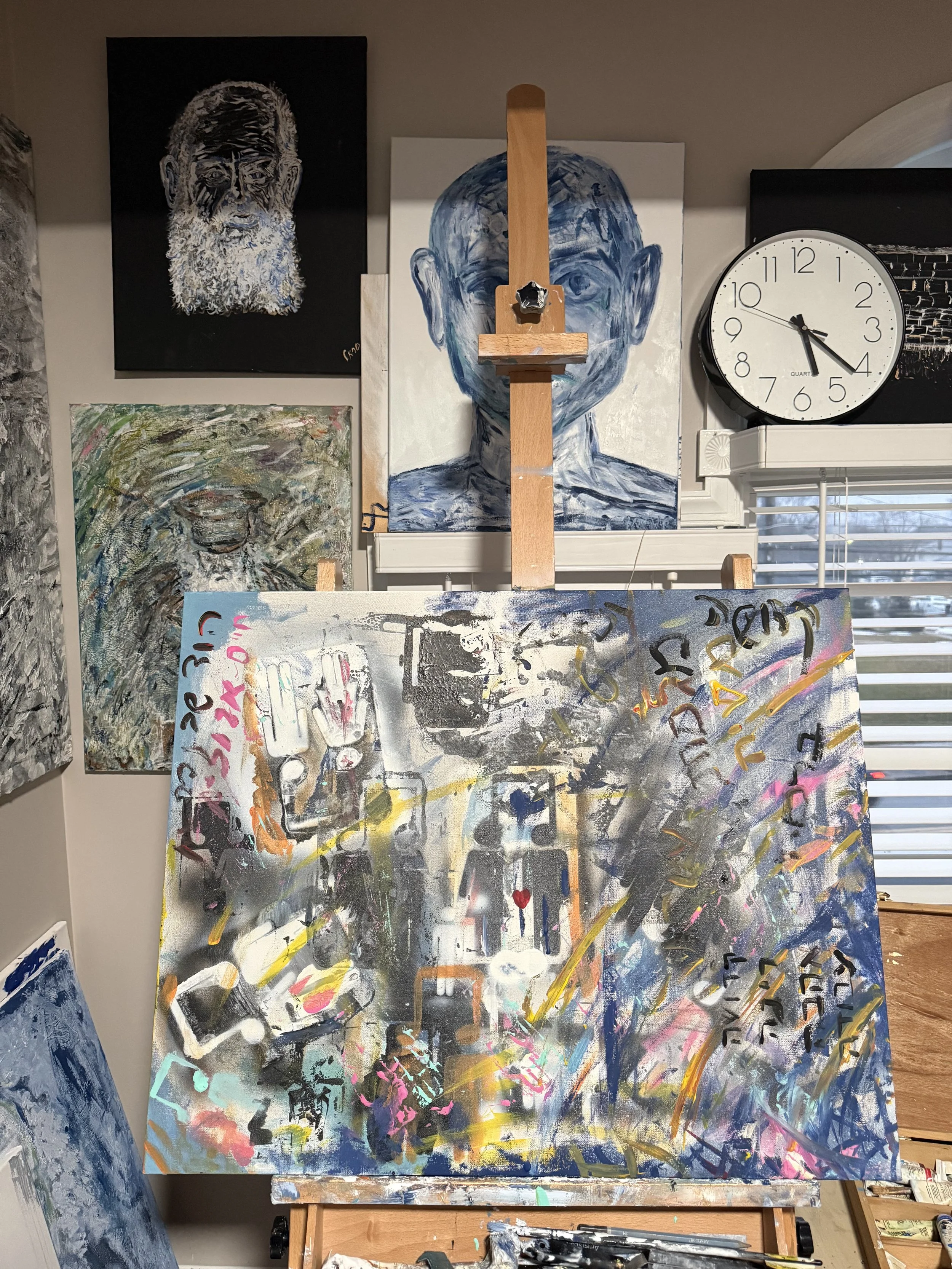 Image 2 of 3
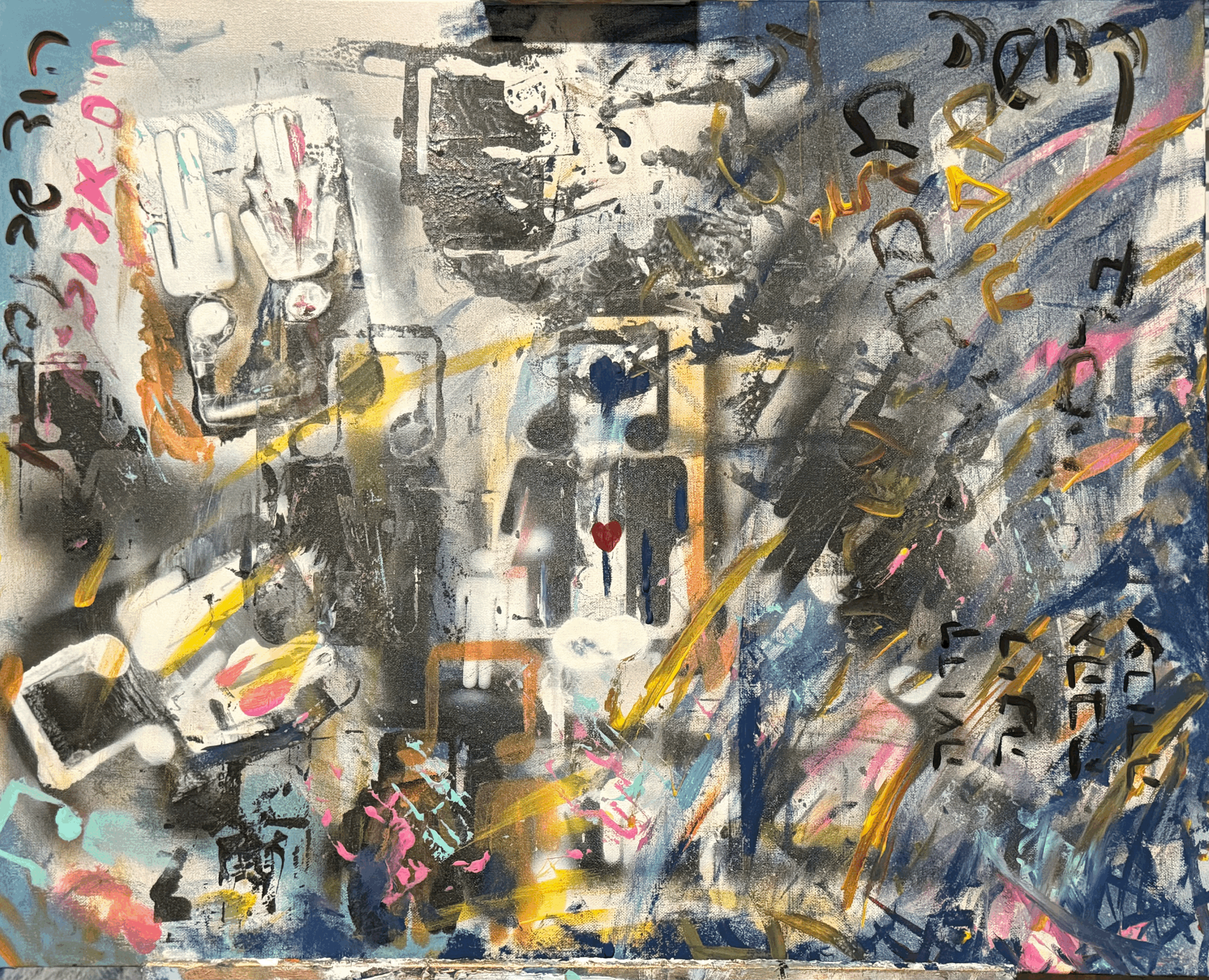 Image 3 of 3
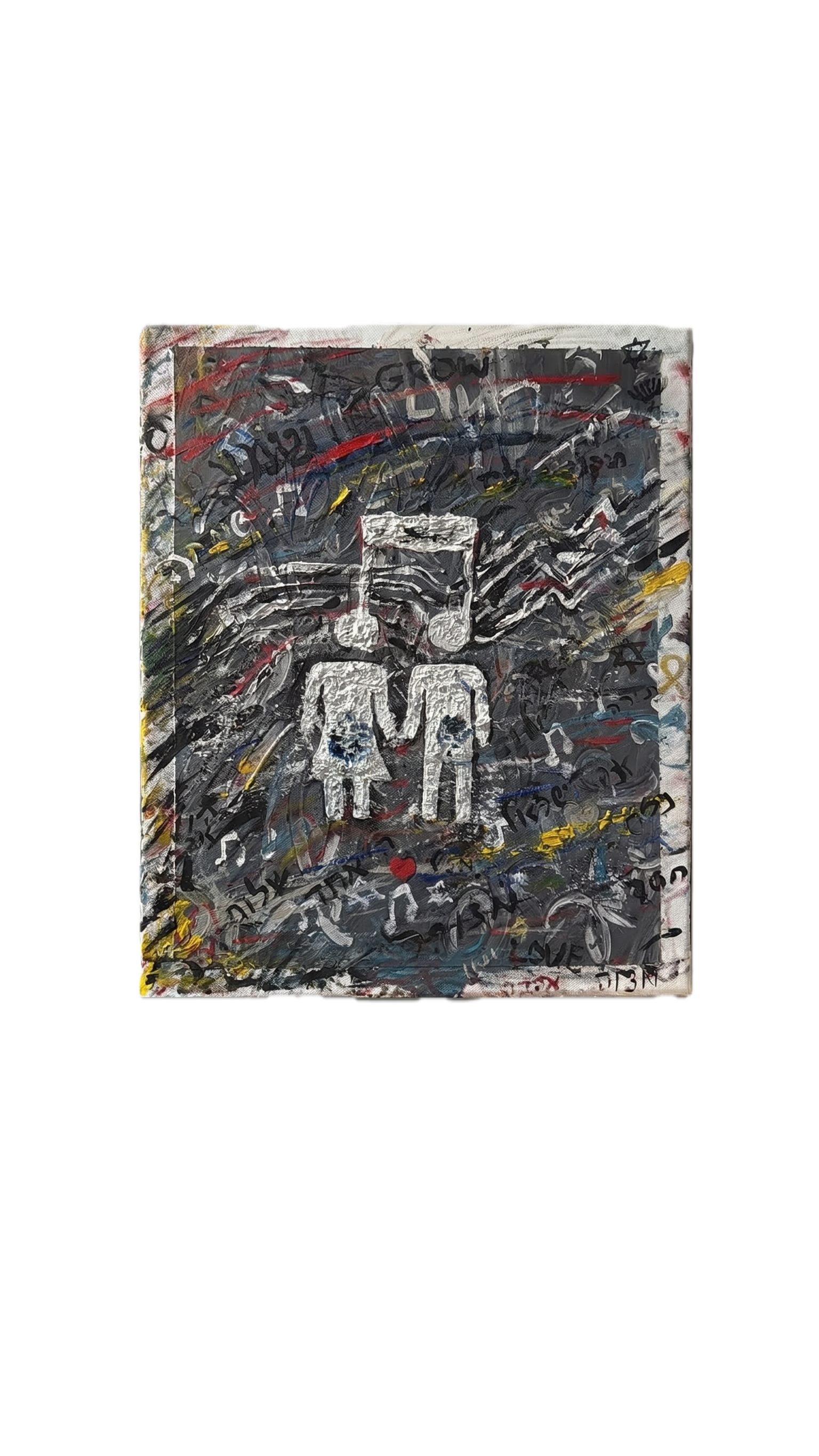
Rina (רינה) This piece is part of the "Rina" collection, referencing one of the seven Judaic expressions of genuine joy. In this context, Rina translates to music. The artwork explores how love and happiness in relationships are likened to musical theory.
The painting illustrates a man and woman standing side-by-side; their forms are distinct, but their heads are bound by a single musical note, symbolizing a shared message and unified mindset. The swirling background represents the energy of a "song" played through a partnership.
The core philosophy is that the most important component of music is symmetry and coordination. A relationship functions the same way. Whether the life a couple shares is as somber as an elegy or as joyous as the Nutcracker, the result is beautiful if they play in perfect harmony. Ultimately, the piece shows that the most wholesome human state is the alignment of two people working toward the same goal.
Rina (רינה) This piece is part of the "Rina" collection, referencing one of the seven Judaic expressions of genuine joy. In this context, Rina translates to music. The artwork explores how love and happiness in relationships are likened to musical theory.
The painting illustrates a man and woman standing side-by-side; their forms are distinct, but their heads are bound by a single musical note, symbolizing a shared message and unified mindset. The swirling background represents the energy of a "song" played through a partnership.
The core philosophy is that the most important component of music is symmetry and coordination. A relationship functions the same way. Whether the life a couple shares is as somber as an elegy or as joyous as the Nutcracker, the result is beautiful if they play in perfect harmony. Ultimately, the piece shows that the most wholesome human state is the alignment of two people working toward the same goal.